Why Model Growth Is Faster With Aluminum Foundry Casting Techniques
Aluminum foundry casting techniques have actually emerged as a critical technique in prototype growth. Their quick production abilities simplify the layout process, allowing for fast versions and adjustments. The lightweight nature of aluminum facilitates ingenious designs, while complicated geometries can be accomplished easily. In addition, minimized preparations and expense effectiveness even more boost this technique. The effects of these advantages extend past simple rate. What aspects add to this increased development?
Recognizing Aluminum Foundry Casting
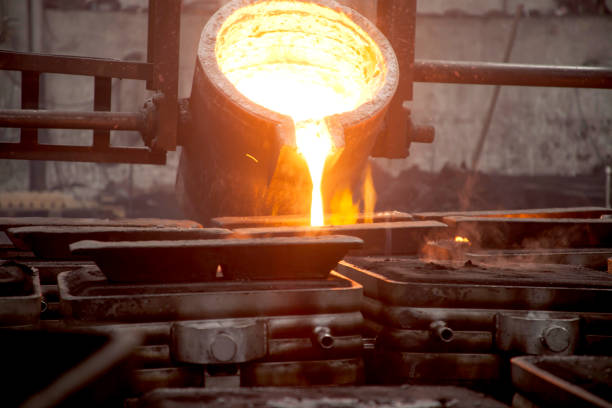
Aluminum foundry casting has been a staple in manufacturing for decades, its significance in model growth proceeds to grow. This process involves putting liquified aluminum into a mold to develop parts with intricate styles and accurate measurements. The flexibility of aluminum enables various casting approaches, consisting of sand, pass away, and investment casting, each offering one-of-a-kind benefits customized to specific project requirements.
Comprehending aluminum foundry casting calls for knowledge of its residential or commercial properties, such as lightweight strength, deterioration resistance, and excellent thermal conductivity. These features make aluminum a suitable selection for prototypes in sectors varying from vehicle to aerospace. In addition, the casting procedure can fit complex geometries, which is crucial for testing ingenious designs. As producers progressively look for efficient and quick prototyping remedies, aluminum foundry casting stands out as a trustworthy approach that boosts the effectiveness of item advancement cycles while keeping premium quality and performance criteria.
Benefits of Rapid Prototyping
Fast prototyping provides many advantages that significantly enhance the product advancement procedure. One substantial advantage is the decrease in time from idea to production. By allowing developers to create tangible versions promptly, teams can determine and deal with concerns early, lessening costly revisions later on. Furthermore, quick prototyping encourages partnership among stakeholders, as physical prototypes assist in more clear communication and responses. This repetitive method cultivates advancement, allowing teams to explore several style models promptly.
Price effectiveness is one more advantage; creating models in smaller sets lowers material waste and decreases total expenditures - Metal Foundry. Furthermore, rapid prototyping accelerates market entrance, permitting business to reply to customer needs and trends extra efficiently. This speed can give an one-upmanship, particularly in busy markets. On the whole, quick prototyping enhances the growth process, improves cooperation, and reduces prices, making it a vital tool for contemporary product growth
Style Adaptability and Intricacy
Making use of aluminum foundry casting methods offers considerable design flexibility, permitting engineers to create complex geometries that would certainly be testing with traditional manufacturing methods. This capability not just enhances aesthetic charm but likewise maximizes functionality in model advancement. In addition, the rapid model chances paid for by these methods allow fast modifications to layouts, fostering innovation and effectiveness.
Advanced Style Capabilities
Fast Iteration Opportunities

Minimized Lead Times and Cost Efficiency
In the domain of aluminum foundry casting, the production process is specifically rapid, allowing suppliers to bring models to market quicker. This expedited timeline not only improves responsiveness to create changes but likewise adds to considerable savings in product expenses. Consequently, companies can attain higher cost performance while preserving premium criteria in model growth.
Quick Manufacturing Process
While typical manufacturing approaches might be hampered by extensive preparations, aluminum foundry casting strategies considerably streamline the production process. This efficiency is attained through the ability to produce intricate forms and designs in a solitary action, reducing the demand for numerous production phases. The fast turnaround from layout to end up model enables companies to accelerate their item growth cycles considerably. Additionally, using aluminum lowers the moment invested in machining and completing procedures, even more enhancing production rate. Therefore, companies can react more rapidly to market needs and readjust layouts based on responses without sustaining considerable delays or costs. Generally, aluminum foundry casting assists in a much faster, much more effective path to model growth.
Lower Material Costs
Expense performance stands as an essential advantage in prototype advancement when using aluminum foundry casting strategies. The intrinsic homes of aluminum, integrated with effective casting methods, cause significant financial savings in product prices. Unlike various other steels, aluminum is light-weight and calls for much less power to make, making it an affordable option for models. In addition, the capability to produce complicated forms with very little waste better minimizes expenses - Metal Casting. This efficiency not just lowers the expense of resources yet likewise lowers the monetary concern connected with machining and completing processes. Suppliers benefit from minimized lead times and boosted production capability, allowing them to designate sources a lot more properly while maintaining high quality standards in prototype growth.
Boosted Material Properties
As advancements in aluminum foundry casting methods remain to advance, the resulting product residential or commercial properties exhibit considerable renovations over traditional methods. Boosted mechanical features, such as boosted stamina and sturdiness, are important in applications requiring trustworthy efficiency. The polished microstructures developed via contemporary casting procedures lead to exceptional tensile strength and fatigue resistance, making components more durable under stress.
Advanced casting strategies help with the manufacturing of lighter elements without jeopardizing architectural integrity. This weight reduction is particularly advantageous in sectors such as aerospace and automobile, where performance effectiveness is important. In addition, enhanced corrosion resistance is achieved via optimized alloy make-ups, making sure durability in numerous atmospheres.
The harmony of the cast product likewise adds to extra predictable performance, which is very important for prototype advancement. Eventually, these boosted product residential or commercial properties not only improve the performance of prototypes but additionally improve the change to final production, sustaining faster and more reliable development cycles.
Study in Effective Model Development
Effective model advancement is commonly exemplified through different study that highlight the effective application of aluminum foundry casting methods. One noteworthy case included an auto maker intending to lower the weight of engine components. By making use of aluminum casting, they efficiently generated lightweight prototypes that maintained architectural stability, leading to improved fuel effectiveness in subsequent vehicle designs.
An additional instance research featured a customer electronic devices business that required rapid prototyping for an ingenious item. Utilizing aluminum foundry casting permitted them to rapidly develop useful models, substantially shortening their time-to-market. The accuracy of casting guaranteed that the models properly stood for the final layout.
Additionally, Aluminum Foundry a medical tool firm leveraged aluminum casting to create detailed parts for a brand-new surgical tool. This method helped with the production of complex geometries while ensuring biocompatibility. These instance researches underscore the adaptability and effectiveness of aluminum foundry casting in driving successful prototype growth throughout varied sectors.
Regularly Asked Concerns
What Kinds of Products Are Best Suited for Aluminum Foundry Casting?
Aluminum foundry casting is excellent for creating auto parts, aerospace parts, and customer electronic devices housings. Its light-weight nature, superb thermal conductivity, and corrosion resistance make it suitable for a variety of applications throughout different markets.
Exactly How Does Aluminum Casting Contrast to 3D Printing for Prototypes?
Aluminum casting typically offers greater sturdiness and surface coating contrasted to 3D printing, making it ideal for practical models. Alternatively, 3D printing enables for quick iterations and complex geometries, enhancing design adaptability during advancement.
What Is the Normal Life-span of a Light Weight Aluminum Prototype?
The typical lifespan of a light weight aluminum prototype can vary significantly, but it generally varies from several months to a couple of years, depending upon use conditions, environmental elements, and the particular design and production procedures utilized.
Are There Environmental Worry About Aluminum Casting Processes?
Environmental interest in aluminum casting procedures include power consumption, greenhouse gas emissions, and waste generation. Furthermore, the mining of bauxite, the main aluminum ore, raises problems connected to habitat damage and water pollution.
Exactly How Can I Select the Right Aluminum Alloy for My Model?
To choose the appropriate aluminum alloy for a prototype, one must think about mechanical residential properties, corrosion resistance, weight, and designated application. Consulting product specifications and conducting examinations can even more direct the selection for perfect performance and longevity.
Aluminum foundry casting techniques have actually arised as a pivotal technique in model growth. As makers significantly welcome aluminum foundry casting techniques, they get accessibility to advanced style abilities that boost both adaptability and complexity in prototype advancement. Aluminum foundry casting methods provide significant chances for rapid version in model growth, allowing designers to fine-tune their concepts with remarkable rate. Price performance stands as an important advantage in model development when making use of aluminum foundry casting methods. Successful model advancement is usually exhibited via numerous case research studies that highlight the effective application of aluminum foundry casting techniques.